

Some men don’t doubt themselves because they failed.
They doubt themselves because nothing ever demanded proof.
No chaos. No hunger. No real risk. Just a smooth runway from one opportunity to the next.
On the outside, that looks like advantage. On the inside, it often creates something harder to name:
A quiet sense that your life doesn’t fully belong to you.
That tension sits at the heart of Dom Tsui’s story.
British kickboxing champion. Brazilian jiu-jitsu black belt. Attorney. Highly educated.
And for a long time, deeply unsure whether any of it was earned.
When Nothing Is Missing – Except Conviction
Dom didn’t grow up deprived.
He grew up supported.
Stable home. Present parents. Strong schools. Clear paths forward.
But instead of confidence, that environment produced something subtler:
A feeling that his success was accidental.
“I had everything I needed growing up. And somehow I turned that into a disadvantage.”
When life treats you well, you don’t feel entitled to question it.
You learn to minimize discomfort. You compare yourself to people who struggled more. You assume dissatisfaction means ingratitude.
So doubt doesn’t disappear. It goes silent.
And silent doubt is the most dangerous kind.
The Invisible Logic of Impostor Syndrome
Dom could see talent in other people easily.
What he couldn’t see was legitimacy in himself.
Not because he lacked skill. But because he didn’t feel tested.
This is impostor syndrome stripped of buzzwords.
Not “I’m not good enough.”
But:
“I didn’t earn the right to be here.”
When success arrives without visible cost, the mind invents one.
Achievement as a Stand-In for Identity
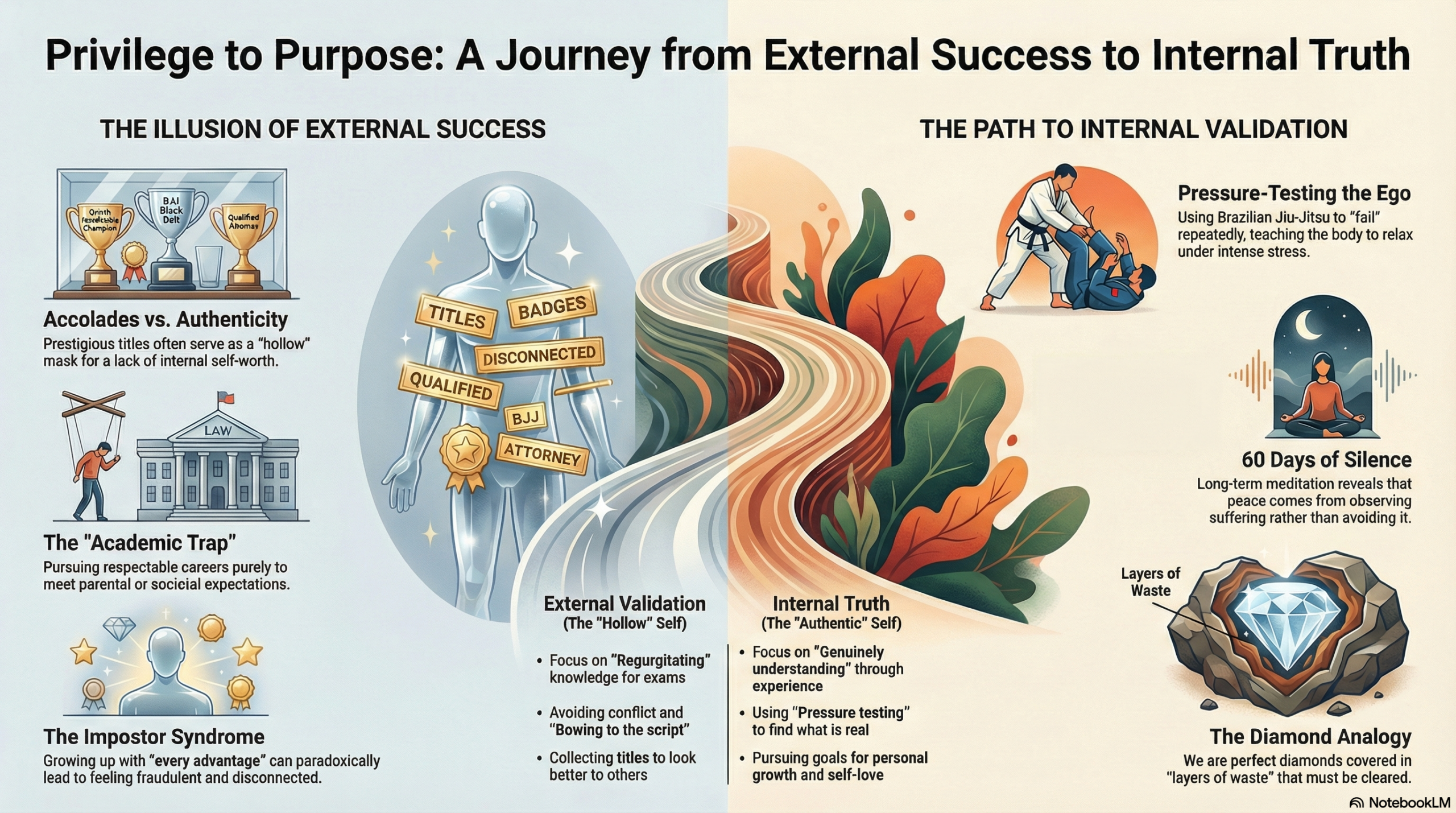
Dom didn’t avoid effort.
He collected achievements.
Martial arts titles. Academic credentials. Professional status.
Each one served a quiet purpose:
If I can’t feel my worth, I’ll demonstrate it.
That strategy works socially.
Internally, it creates a vacuum.
Research on motivation shows this clearly: when self-worth depends on external validation, performance can rise while internal stability erodes.
You become impressive. And privately unanchored.
Why Privileged Men Seek Pain
There’s a pattern that shows up again and again among high-functioning men with easy starts:
They manufacture hardship.
Not out of masochism. Out of necessity.
If nothing ever tested you, you go looking for tests.
This isn’t self-destruction. It’s self-verification.
Dom found his proving ground in combat sports.
Martial Arts Without Illusion
Like many men, Dom grew up admiring Bruce Lee.
Martial arts represented power, clarity, and identity.
But there’s a critical difference between traditional forms and combat sports.
One preserves narrative. The other deletes it.
“You can practice forms forever. But if you can’t fight, you can’t fight.”
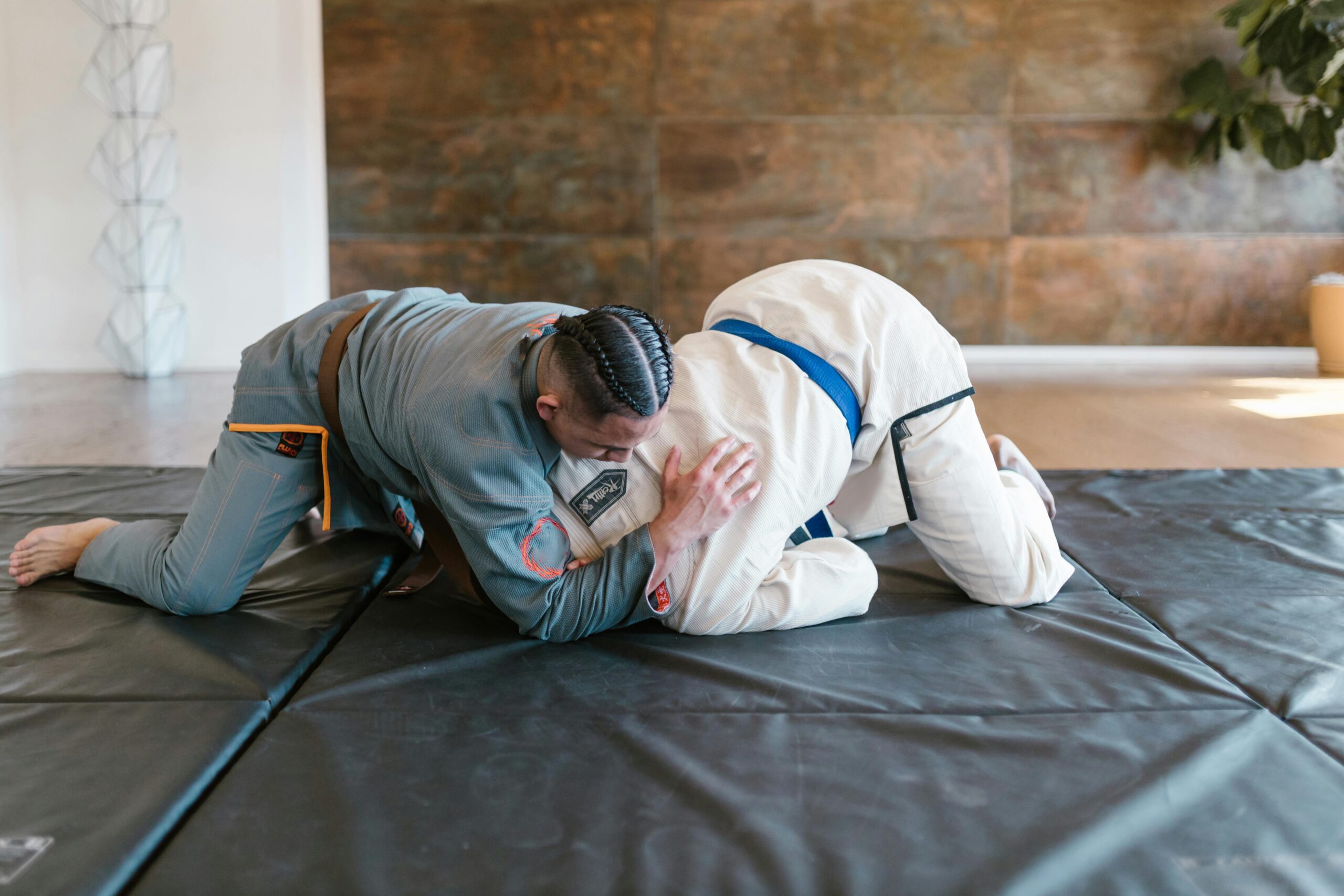
Brazilian jiu-jitsu and kickboxing offered no credit for intention. No reward for effort. No identity protection.
You adapt – or you lose.
“Jiu-jitsu is a simplified version of life. You face problems, try solutions, fail repeatedly, and eventually something works.”
That immediacy matters.
Real feedback builds trust faster than affirmation ever could.
Not confidence. Self-trust.
Discipline Isn’t Supposed to Hurt Forever
There’s a seductive lie in discipline culture:
If it’s painful, it must be meaningful.
Dom doesn’t buy it.
“People think struggle gives life meaning. But if you want to be effective, you should be trying to make things easier.”
This isn’t laziness. It’s efficiency.
In jiu-jitsu, beginners burn energy. Experts waste none.
Progress shows up as less effort under pressure – not more suffering.
If your life keeps getting harder the more disciplined you become, something is off.
The Cost of Performing
One of Dom’s most honest realizations wasn’t about dominance or strength.
It was about hiding.
“I spent most of my life trying to fit into a smaller container.”
When approval feels conditional, authenticity becomes dangerous.
You perform what’s acceptable. You conceal what isn’t.
Over time, that split becomes identity.
Dom’s confidence didn’t come from becoming louder or tougher.
It came from needing fewer explanations.
Meditation as Exposure Therapy
Meditation didn’t give Dom peace.
It removed distraction.
“You sit with yourself. There’s nowhere to run. Eventually you see what’s actually there.”
What he found wasn’t inadequacy.
It was disconnection.
And disconnection, once seen, is workable.
Purpose Doesn’t Come From Suffering
Purpose didn’t arrive when Dom proved enough.
It arrived when he stopped trying to earn worth through struggle.
That’s the shift from privilege to purpose.
Purpose isn’t pain. It’s alignment.
Doing things that demand presence and accountability – not because they hurt, but because they’re real.
Questions That Don’t Go Away
Where have I chosen difficulty to feel legitimate?
What would effective look like instead of hard?
If achievement disappeared, what would still feel earned?
Where am I performing instead of participating?
If those questions unsettle you, pay attention.
Signals You’re Stabilizing
Not motivation. Not hype.
Look for:
- Less internal noise under pressure
- Faster recovery from mistakes
- Cleaner decisions
- Reduced need for validation
That’s self-worth organizing itself.
Final Reflection
Dom Tsui’s story isn’t about becoming extraordinary.
It’s about becoming honest.
Privilege didn’t disqualify him from purpose.
It delayed it – until he stopped trying to suffer his way into self-respect and started living in direct contact with reality.
Next Step
Watch Dom Tsui’s full episode on The Limitless Brave Show.
Then sit with the one insight you can’t ignore.
If you know someone who keeps choosing harder paths just to feel real, send this to them.
And if grounded conversations about identity, discipline, and masculine growth matter to you – stay connected.